Flat and Low-Slope Roofing
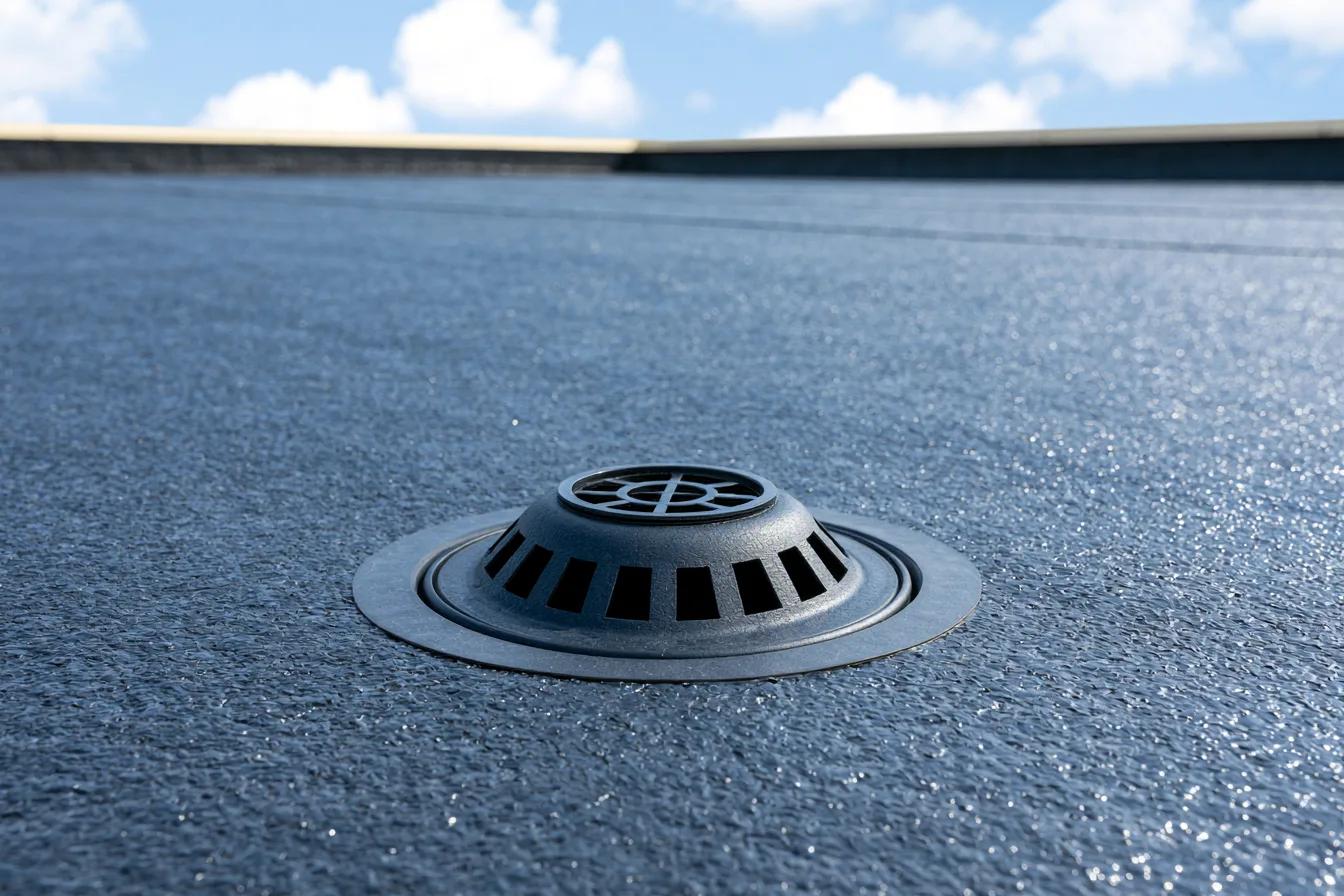
Low-slope roofs still need positive drainage. Deck slope, tapered insulation, drains, scuppers and overflow paths influence how water leaves the roof and where repair work belongs.
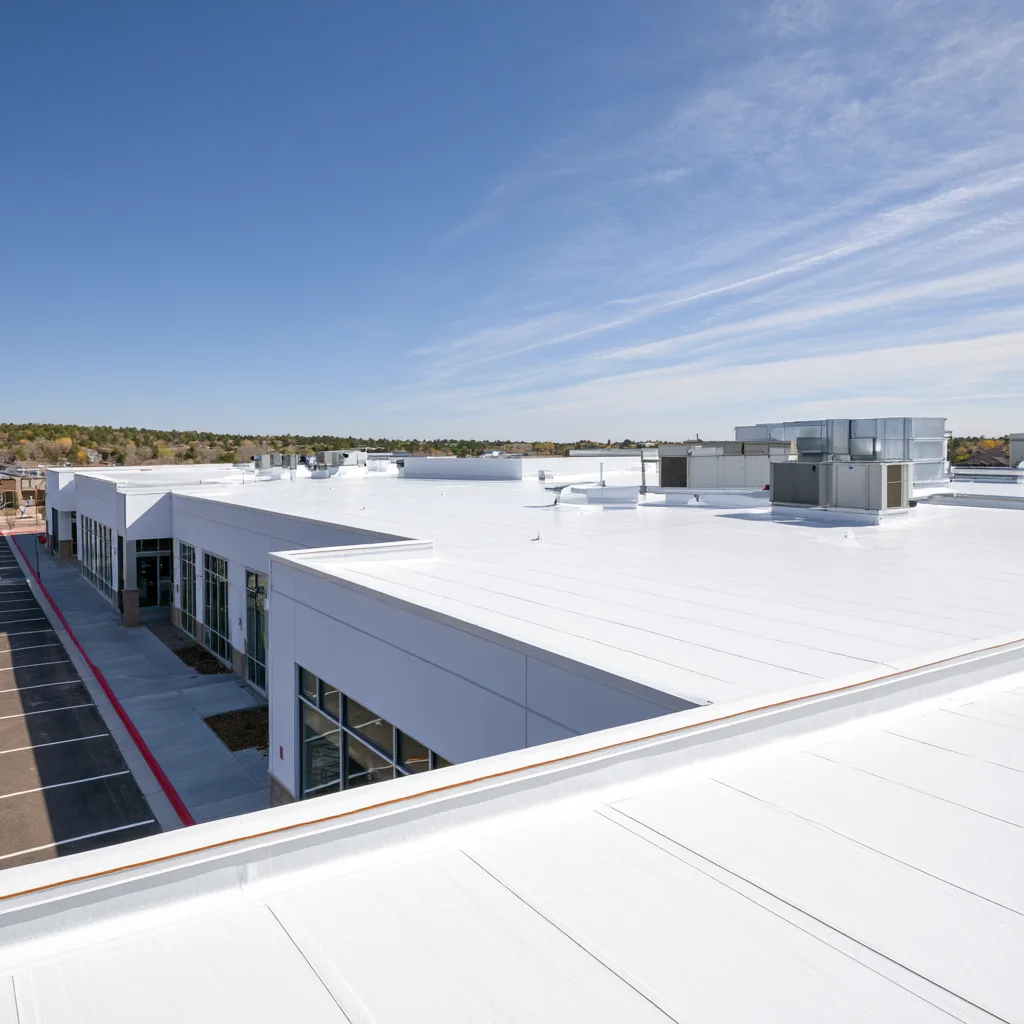
A commercial roof is part of the building operation. We help Newcastle owners and property managers work through leaks, drainage, restoration and replacement with the roof system and the occupied space considered together.
Call about your roof (405) 561-6780
A wet ceiling tile can sit well away from the opening above it. On a low-slope roof, water can move within insulation or along the deck before it reaches the occupied space. We examine the field, seams, roof edges and the interruptions at equipment curbs, pipes and drains.
The assessment needs to establish what can be repaired into. A sound membrane around a local defect supports a different repair from loose attachment, saturated insulation or widespread deterioration. Surface appearance alone does not describe the condition of the assembly below it.
The building use matters from the start. Tenant entrances, operating areas, rooftop maintenance paths and equipment access influence how repair or replacement work is approached.
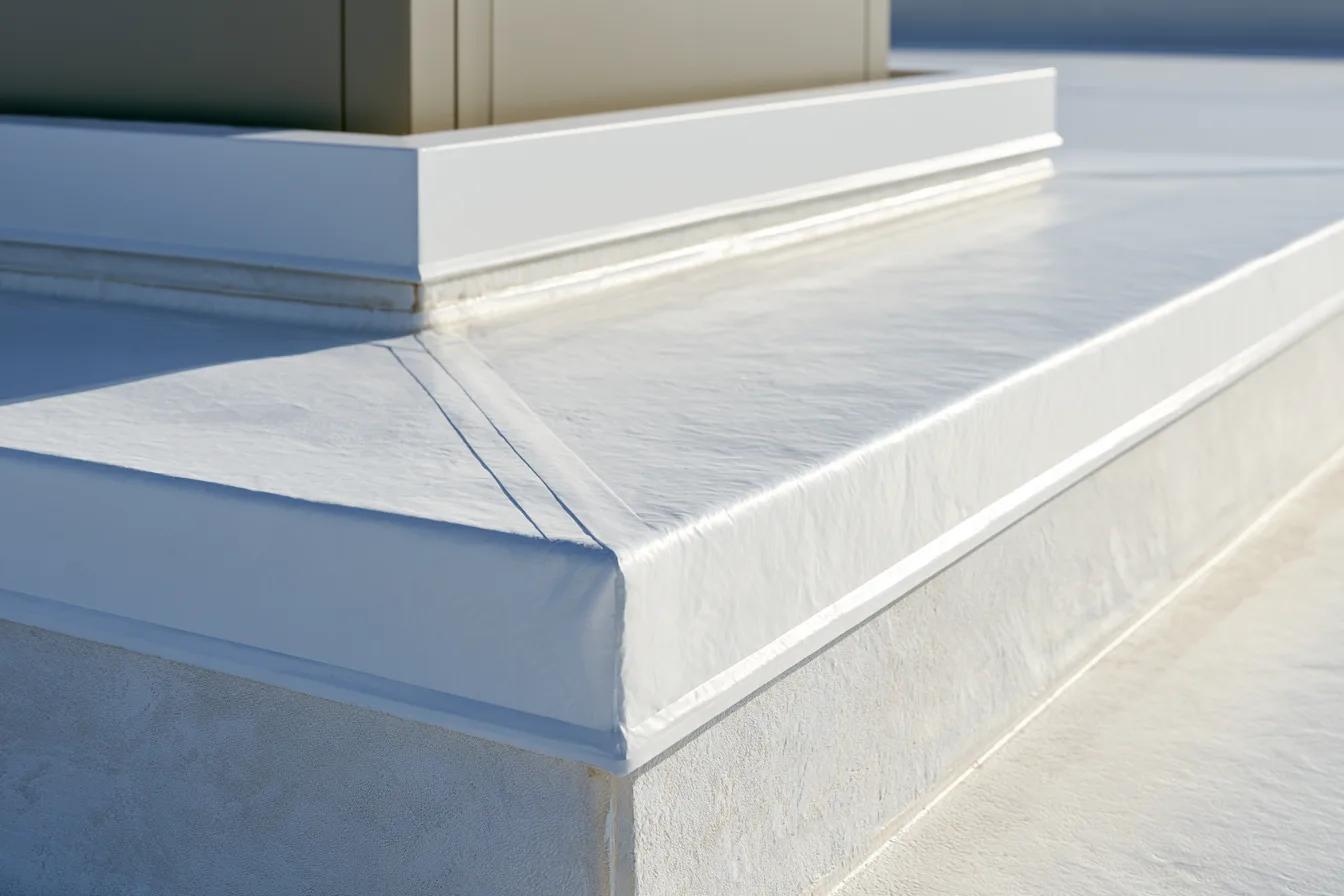
The roof system determines its connections, repair materials and restoration options. We keep those differences visible when explaining the work.
Low-slope roofs still need positive drainage. Deck slope, tapered insulation, drains, scuppers and overflow paths influence how water leaves the roof and where repair work belongs.
A reinforced thermoplastic membrane uses heat-welded seams and system-specific flashing. Attachment, insulation and curb details are as important as the visible membrane field.
A compatible coating protects a prepared roof surface. It does not replace wet insulation, restore failed attachment or turn unsuitable drainage into a sound assembly.
A defined seam, edge or penetration failure can be repaired when the adjacent system is serviceable and the layers beneath it are addressed.
Replacement deals with widespread deterioration and gives the project a chance to rebuild insulation, drainage, attachment and edge details together.
The useful choice follows the existing roof, rather than a preferred product being applied to every building.
A localized puncture, open seam or failed curb flashing can have a controlled repair boundary. Compatible materials and preparation let the repair reconnect to the existing system. The area around the defect still needs checking for wet or damaged layers.
Coating or restoration begins with a suitable, secure and dry base. Cleaning, repairs, adhesion and compatibility need to be resolved before a protective surface is applied. The selected system sets its preparation and thickness requirements.
Widespread membrane deterioration, recurring failures or moisture through underlying layers can make replacement the useful longer-term scope. New insulation and drainage design need to fit the deck and the way water exits the roof.
Low-slope does not mean level. Water needs a continuous route to the designed drain or scupper. Debris at an outlet is one cause of ponding; low areas, compressed insulation and inadequate slope are different causes and call for different work.
Around rooftop equipment, membrane flashings need enough height, secure terminations and a proper connection at corners and penetrations. Maintenance traffic also needs a route that protects the roofing surface.
A project plan accounts for the occupied areas beneath the work. Material staging, access and roof opening have to be coordinated with tenants, deliveries and equipment service. The building owner’s constraints belong beside the roof scope rather than being added after a system has been selected.
Commercial prices need a system-specific scope. The residential asphalt calculator does not price membrane repair, coatings or commercial replacement.
| Decision | What determines the work |
|---|---|
| Moisture and existing layers | What determines the workThe extent of wet insulation and the number and condition of existing layers affect removal, disposal and rebuild scope. |
| Deck, insulation and attachment | What determines the workDeck type, required fastening or adhesion and the insulation arrangement shape the new assembly. |
| Drainage and edge details | What determines the workDrains, overflow outlets, parapets, roof edges and equipment curbs add distinct work beyond the open membrane field. |
| Building operations | What determines the workWork access, staging, occupied entrances and rooftop equipment coordination change how the job can be delivered. |
A free roof inspection can begin the condition discussion. Investigation and the final scope are specific to the building.
Yes, when the existing assembly is suitable for the selected restoration system and remains secure, serviceable and appropriately dry. Wet insulation, failed attachment or widespread deterioration need work beyond a surface coating.
No. A blocked outlet is one possibility. Low areas, inadequate slope or damaged insulation can also hold water. The drainage route and the roof layers need to be assessed together.
No. TPO is one membrane system. Other thermoplastic, rubber, modified-bitumen and built-up systems have different seam and repair requirements. A repair starts by identifying the actual assembly.
Tell us about the building, where the problem appears and any access or operating constraints. We can start with a free roof inspection and a practical discussion of the existing system.